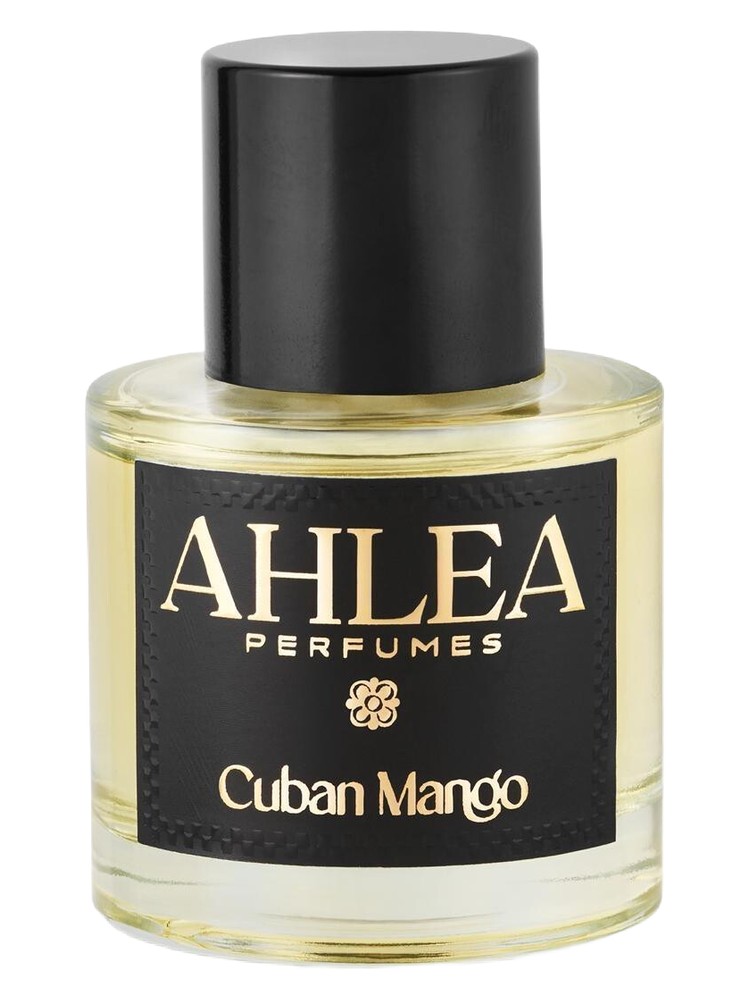
Cuban Mango
Ahlea
Main Accords
Notes Pyramid
Notes Pyramid
Overall Rating
4.8
46 votes
Sillage
Longevity
About This Fragrance
Cuban Mango by Ahlea is a Aromatic Fruity fragrance for women and men. This is a new fragrance. Cuban Mango was launched in 2024. The nose behind this fragrance is Alejandro Ponsà. Top notes are Mango and Lime; middle notes are Magnolia Leaf, Sugar and Black Cardamom; base notes are elemi, Amyris, Guaiac Wood and Ambrette. Cuban Mango is a journey through the living history of the land where I was born, the one that nourished my family’s roots and the people of “La Mayor”—as we, the Antilleans, call Cuba—with its generous sap. It is not a melancholic reminiscence anchored in what could have been but rather in what was and what is. The proud hands of those who shaped it are present in every fruit, every resin, and every sugarcane stalk—essential ingredients of this perfume that reminds us that Cuba is effort, patience, willpower, and fulfilled dreams. I want you to experience my homeland through scent. They say memories are tied to smells, and that each scent forever binds them to our minds. Every ingredient in this perfume was chosen for its history and influence on my people’s collective memory. What better way to understand Cuba and its people than through this? When a perfumer draws inspiration from my homeland, they always turn to Cuba’s two great icons—tobacco and rum—reducing my people’s memories, which are as rich in stories as they are in fruits, woods, and resins. That is why I chose perfumer Alejandro Ponsà to embark on this aromatic adventure. We did not want just another Cuban perfume; we wanted The Perfume of my land, with capital letters. We decided to take a different path in creating it, which meant selecting unique raw materials. The quality of these materials was crucial, and the making of the extract had to be carefully crafted and unique. That is why we both chose Maese Lab as the supplier of raw materials and the manufacturer of the perfume. The mango chosen for this memory belongs to the “Bizcochuelo” variety, which is undoubtedly the favorite among Cuban palates. It is cultivated in the hills of El Caney, near Santiago de Cuba. It was brought in 1902 by Spaniard José Burgos from “La Española” (Santo Domingo). Although not native to this land, it adapted so well that its flavor, fragrance, and sweetness rival those of mangos of the same species from its homeland in Santo Domingo. The accord of this fruit was masterfully composed by the experts at Maese Lab. The moment I first smelled it, I had no doubts—memories of my childhood swirled in my mind. It was exactly what I wanted to convey to those who would smell my perfume. Persian lime has been intensively cultivated in Jagüey Grande since 1970. Without a doubt, it is the most fragrant and flavorful lime on the entire island. Although this citrus fruit has existed in Cuba for centuries, it was traditionally grown for family consumption. It wasn’t until the 1970s that large-scale plantations began in this region of La Mayor, with the goal of exporting its delicious flavor to the world and fostering prosperity in the region. Cuba is sweet richness, and its gold lies in the mountains of Villa Clara, where “Caña Cristalina” has been cultivated for centuries. This is one of the many sugarcane varieties that brought fame and fortune to our land. We could have drawn inspiration from the exquisite and refreshing Guarapo (sugarcane juice), but that would have excluded the resinous, smoky, and honeyed scents of Mascabo, that rustic, sticky, and aromatic sugar that gives life to rum and refined sugar. We perfected its accord by blending Ethyl Maltol and Guayaco Palo (Guaiac wood). Guayaco Palo, known by my people as Guayacán Azul, is a tree with a rich history in my homeland. The Spanish called it “Lignum Vitae” (wood of life) because its resinous wood was believed to cure deadly infectious diseases. Its wood is highly coveted for its hardness and beauty, with the finest quality found in the central region of the island, in Camagüey province. Its essential oil has a waxy, sticky appearance and an extraordinary fixation capacity. However, its greatest virtue is its woody, unctuous, deep, and smoky aroma, which adds a unique personality to this fragrance. The Elemi resin from Banes, Holguín is undoubtedly one of the most aromatic gifts we received from our Filipino brothers. In Cuba, it is known as Copal de Filipinas. These trees were introduced to the region by the Spanish around 1600 to exploit their resin. Eventually, they became part of our landscape and have remained there to this day. Its intensely citrusy, deeply sweet balsamic aroma enhances the mango, adds longevity to the Persian lime, and leaves us with a subtle hint of ripe pineapple. Amyris, or Cuaba Blanca, as we call it on the island, is an arboreal shrub that produces a very hard, resinous wood with a subtle and pleasant warm balsamic aroma with soft, buttery woody notes. Its essential oil provides great fixation and roundness to this perfume. The highest-quality Amyris is found in Holguín province, in the eastern region of the island. Cuba is family, home gatherings, and love for our elders. Nothing represents this better than a kitchen with steaming stoves and a grandmother crushing spices to prepare a dish that warms the heart. Capturing that scent was difficult, but to me, it was an essential memory—just as it is for all of us who have left our homeland behind. Everything became clear one afternoon while sampling raw materials with Alejandro Ponsà at Maese Lab. Suddenly, to break the creative block, Pablo offered us a strange spice from Nepal, a place as distant as my own land now seems from Spain. But the moment I smelled that rarity, it was like an arrow to the heart. My eyes welled up, and my soul was instantly filled—it was my mother and my grandmother, all of us gathered in our home’s kitchen. Its spicy and piquant aroma, mixed with a deep, wood-fired smokiness, was everything I sought for this fragrance. And there it was, locked in a rustic, brown, wrinkled pod from a place thousands of miles away from my beloved Cuba. Life is like that—full of unexpected moments and pleasant surprises in the least expected places. One scent that has always fascinated me and captured my mind is Ambergris. The sea, salt, elegance, and seduction are all represented in it. In Cuba, we always heard stories of fishermen finding Ambergris floating near La Mayor, calling it the gold of the sea that came from the neighboring Bahamas. I was always amazed that something so simple could radically change the future of a humble family. Cubans are a people hungry for progress and personal triumph. I wanted to represent that spirit of luck and sudden fortune that can unexpectedly change your life, incorporating something as symbolic as Ambergris. But it had to be subtle, just as luck itself is. That is why we chose Ambercore and Ambrettolide—two molecules that fit this purpose perfectly. They are present without overshadowing the mango, sugarcane, and resins. They accompany and refine but do not alter or dominate this fragrance’s personality. Between the provinces of Granma and Santiago de Cuba rises the mighty Sierra Maestra, ever green, lush, and humid, with crystal-clear streams and waterfalls flowing among magnificent trees. But among this incredibly green landscape, magnolias stand out, their glossy leaves and magnificent flowers shining. I have always had a fondness for this tree, and it is also part of my memories of Cuba. The scent of its flowers winds through the mango, lime, and sugarcane—its spirit was already present in the perfume, but its body was missing: green, radiant, fresh, and vibrant. That is why we incorporated the essential oil of its leaves. The memory was now complete. Top notes: Mango, Lime Middle notes: Black cardamom, Magnolia leaf, Black sugar Base notes: Elemi extract, Amirys, Guaiacwood, Ambrette
Similar Fragrances
Reviews SummaryAI Generated
AI Analysis
User reviews summary.
Key Points
Common Descriptors
Rating Distribution
Leave Your Review
Please sign in to leave a review
Community Reviews (0)
No reviews yet. Be the first to review!